


Hey, we hope you learned something new!
Let the Parkyd Digital team help you to grow your business, we are just a call away.

Parkyd's free website grader makes understanding website performance easy. Learn about your page performance, security, search engine optimization (SEO), and mobile experience. Discover what makes your site strong and uncover new opportunities for the future.
Check My WebsiteUse Cases

Search is no longer just a list of links.
It is now an answer.
And that answer is increasingly coming from AI systems like ChatGPT, Gemini, and Perplexity.
For B2B companies, this changes everything.
Earlier, your goal was simple:
Rank on Google → get clicks → convert
Now the journey looks different:
Ask → AI summarizes → shortlist → then clicks happen
If your brand is not part of that AI-generated shortlist, you are not even in the consideration set.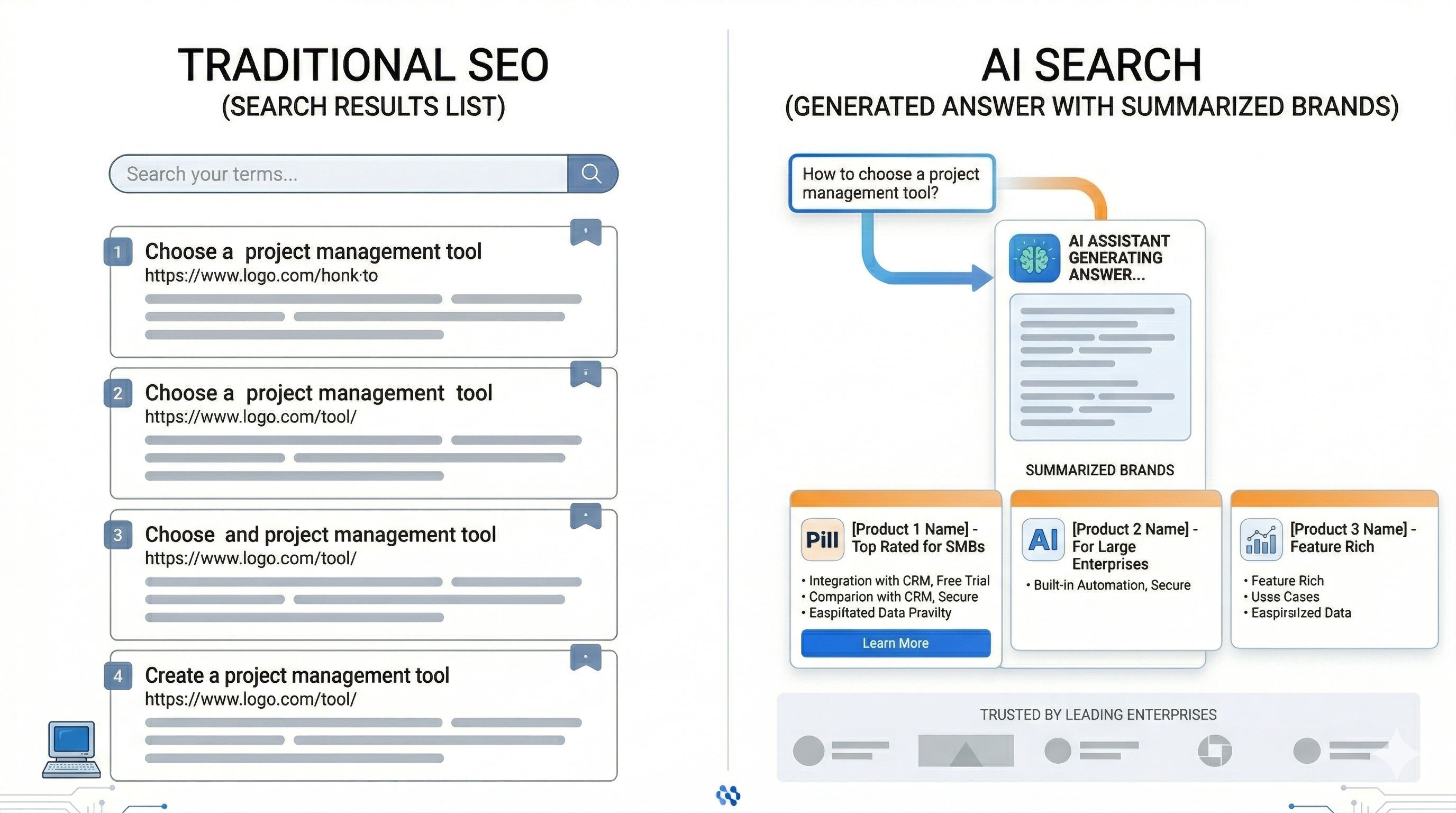
AI SEO strategy is not about ranking pages.
It is about becoming a trusted source that AI systems can understand, validate, and reuse.
Traditional SEO focuses on:
AI search optimization focuses on:
extractable information
In simple terms:
👉 Google ranks pages
👉 AI systems recommend answers
You can rank in top 3 on Google and still not appear in AI-generated answers.
This happens when:
AI systems prefer:
If your content reads like a long blog but does not clearly answer the query, it gets ignored.
Let’s take a realistic B2B example.
A mid-market SaaS platform for revenue operations teams.
Before
Problem: Content was written as long-form blogs without clear structure.
AI systems could not easily extract:
Instead of creating more content, the team changed how content was structured.
They moved from:
keyword-first thinking to entity + intent-based structure
They implemented five major changes:
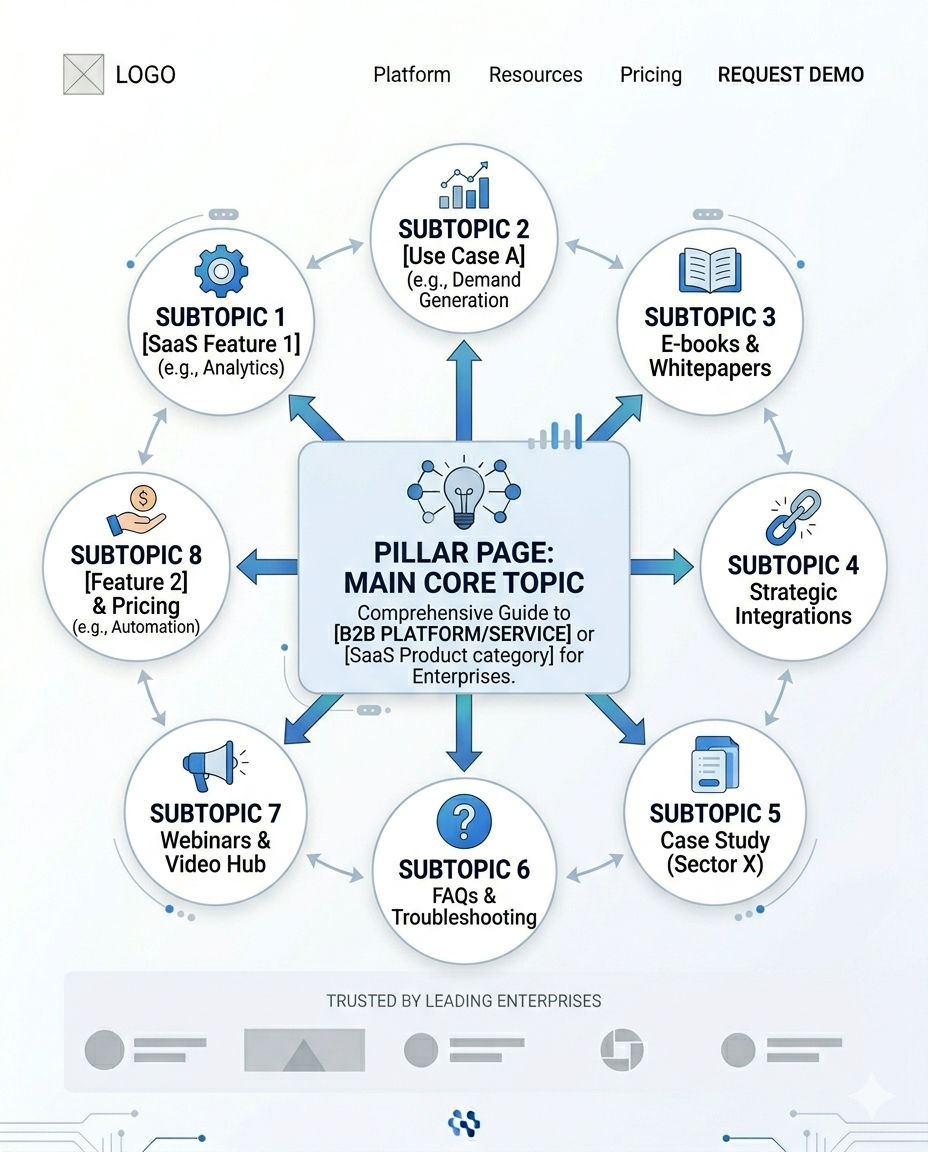
1. Built a clear pillar page
“Revenue Operations Software for B2B SaaS”
2. Created supporting pages
3. Rewrote content format
4. Strengthened authority signals
5. Expanded external validation
Within a few months:
The biggest change was not traffic.
It was who was coming and how early they discovered the brand.
AI systems are trying to answer questions using the most reliable sources.
They prioritize content that is:
✔ Clear
✔ Structured
✔ Credible
✔ Consistent across sources
Think of it like this:
Before: “Which page ranks best?”
Now: “Which source can I trust to answer this question?”
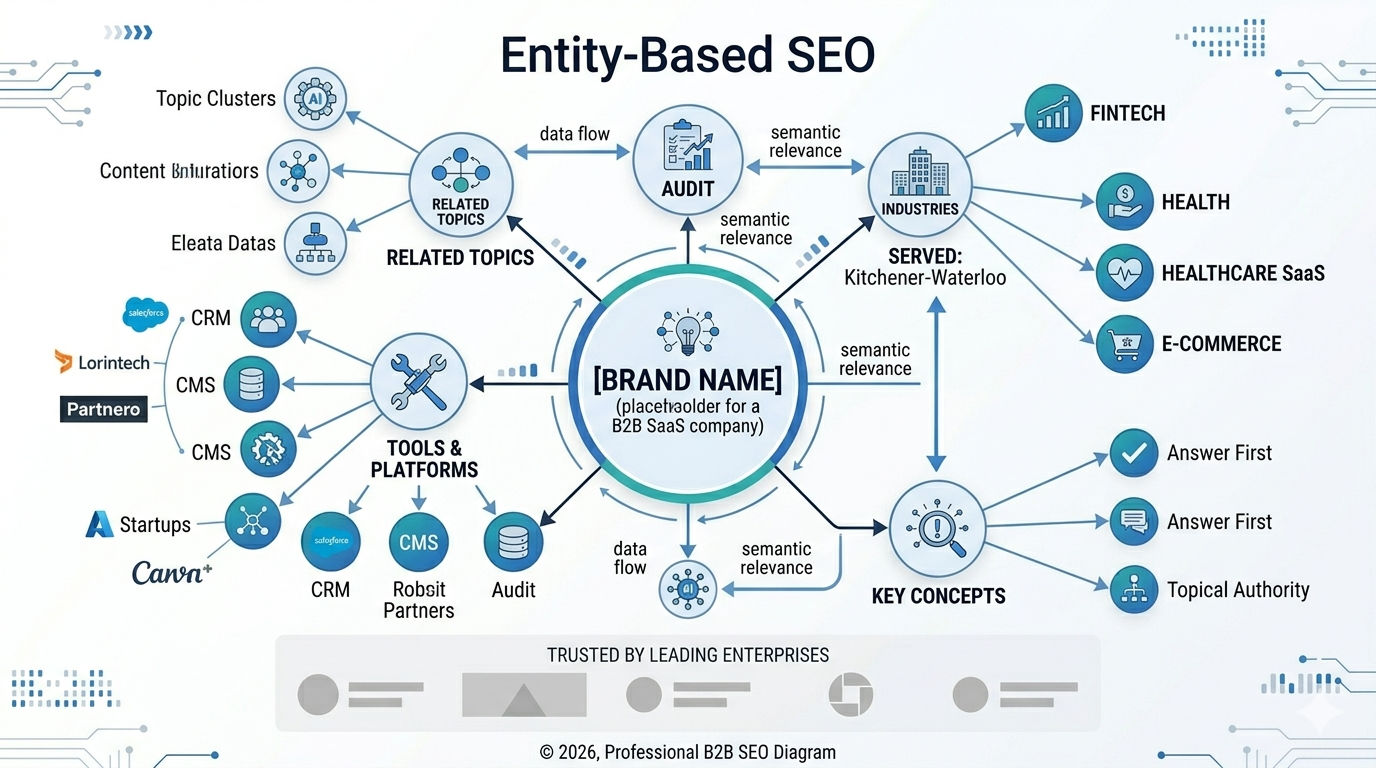
Your brand must be clearly understood.
That means:
Example: If you are a B2B analytics platform, mention:
This helps AI systems place you correctly.
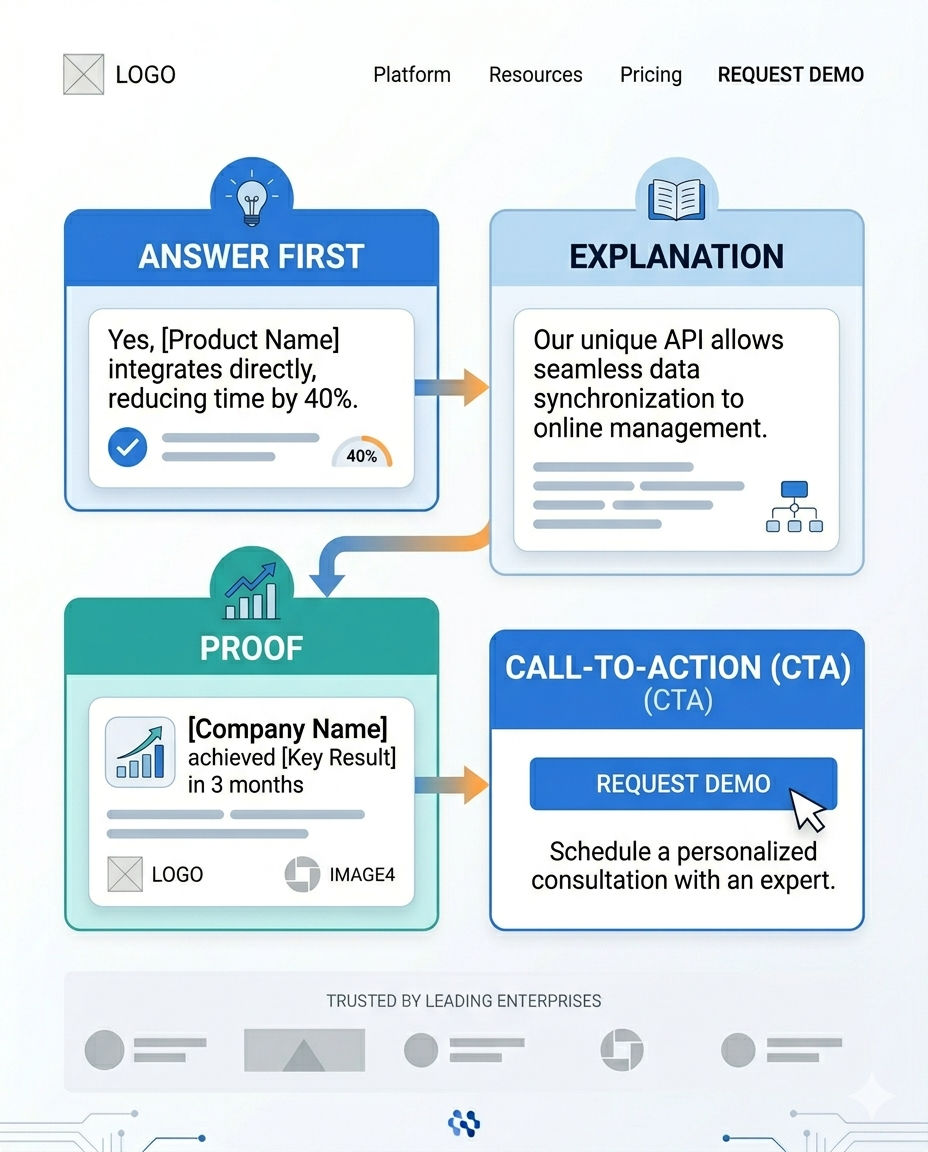
AI prefers content that is easy to extract.
Best format:
Avoid:
AI systems validate trust before using content.
Strong signals include:
Structure helps both users and AI.
Use:
Internal links create a topic map.
They help AI understand:
Here is a practical playbook:
The goal is simple:
AI search is not replacing SEO. It is reshaping it. The companies that win will not be the ones publishing more content. They will be the ones building the clearest, most credible source in their category.
If your brand is not showing up in AI-generated answers, you are missing early-stage discovery.
Parkyd Digital helps B2B companies:

Book a no-pressure discovery call and see how we can get your business rank, drive traffic, generate leads, and revenue. No sales pitch. No fluff. Just clarity.
Parkyd Digital is an award-winning B2B digital marketing agency in Kitchener-Waterloo region, Canada, helping businesses grow with SEO, Paid Media, HubSpot & high-performance website design & development. We partner with brands across GTA, Canada & entire North America to drive visibility, qualified leads & measurable revenue growth.
 Kitchener
 Toronto
 Vaughan
 Mississauga
 Brampton
 London
2026 - Parkyd Digital | All Right Reserved
Privacy Policy | Terms & Conditions

Hey, we hope you learned something new!
Let the Parkyd Digital team help you to grow your business, we are just a call away.
Click here to grow your business