


Hey, we hope you learned something new!
Let the Parkyd Digital team help you to grow your business, we are just a call away.

Parkyd's free website grader makes understanding website performance easy. Learn about your page performance, security, search engine optimization (SEO), and mobile experience. Discover what makes your site strong and uncover new opportunities for the future.
Check My WebsiteGuides

Most B2B websites do not have a traffic problem. They have a structure problem.
Companies invest in SEO, content, and paid media, yet qualified visitors leave without taking action. In most cases, this happens because the website is organized like a digital brochure instead of a revenue system.
A modern website design blueprint is not a sitemap built around page count. It is a practical framework for deciding which pages you need, what role each page plays in the buying journey, and how those pages work together to turn intent into sales conversations.
This guide explains the 6+X B2B website blueprint. These are the six non-negotiable core pages every B2B lead generation website needs, plus optional accelerator pages that help deals move faster as your business grows.
There are two common ways B2B websites are built.
A design-led site starts with layouts and visuals. Messaging, CTAs, and forms are added later. These sites often look polished but leave buyers unsure about next steps.
A lead-gen-led site starts with different questions:
Who are our ideal customers and buying committees?
What questions do they ask before talking to sales?
Which pages reduce risk and justify a decision?
A blueprint of a website is your go-to-market strategy translated into structure. Buyers typically move through a predictable path. They clarify the problem, evaluate options, reduce risk, and justify the decision internally. A strong B2B website blueprint supports that path instead of fighting it.
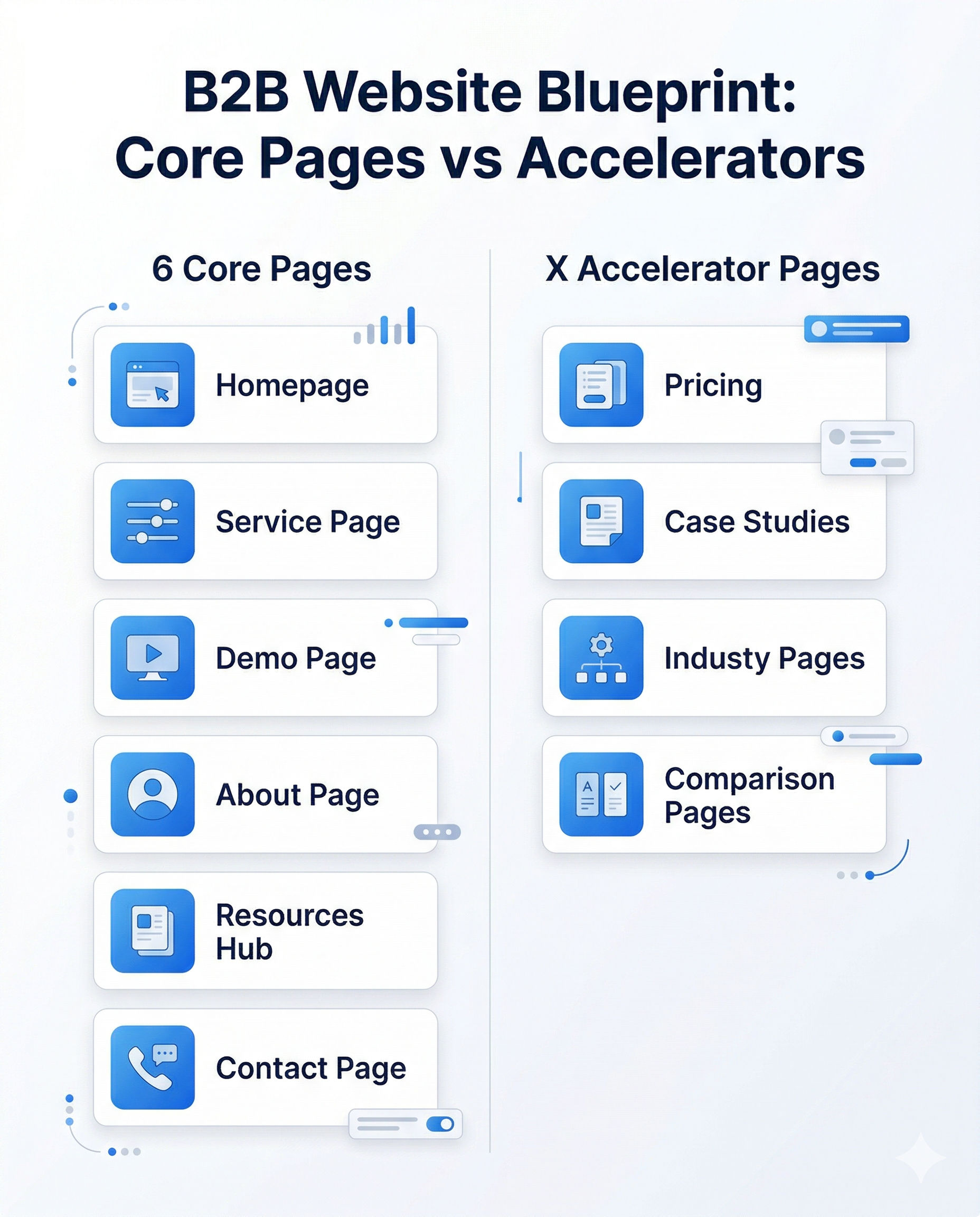
Rather than following a rigid checklist, this model separates pages into two groups:
The 6 Core Pages
These are required to run a reliable B2B lead generation engine.
The “X” Accelerator Pages
These are added once you see consistent sales patterns and buyer objections.
This approach keeps your site focused and scalable.
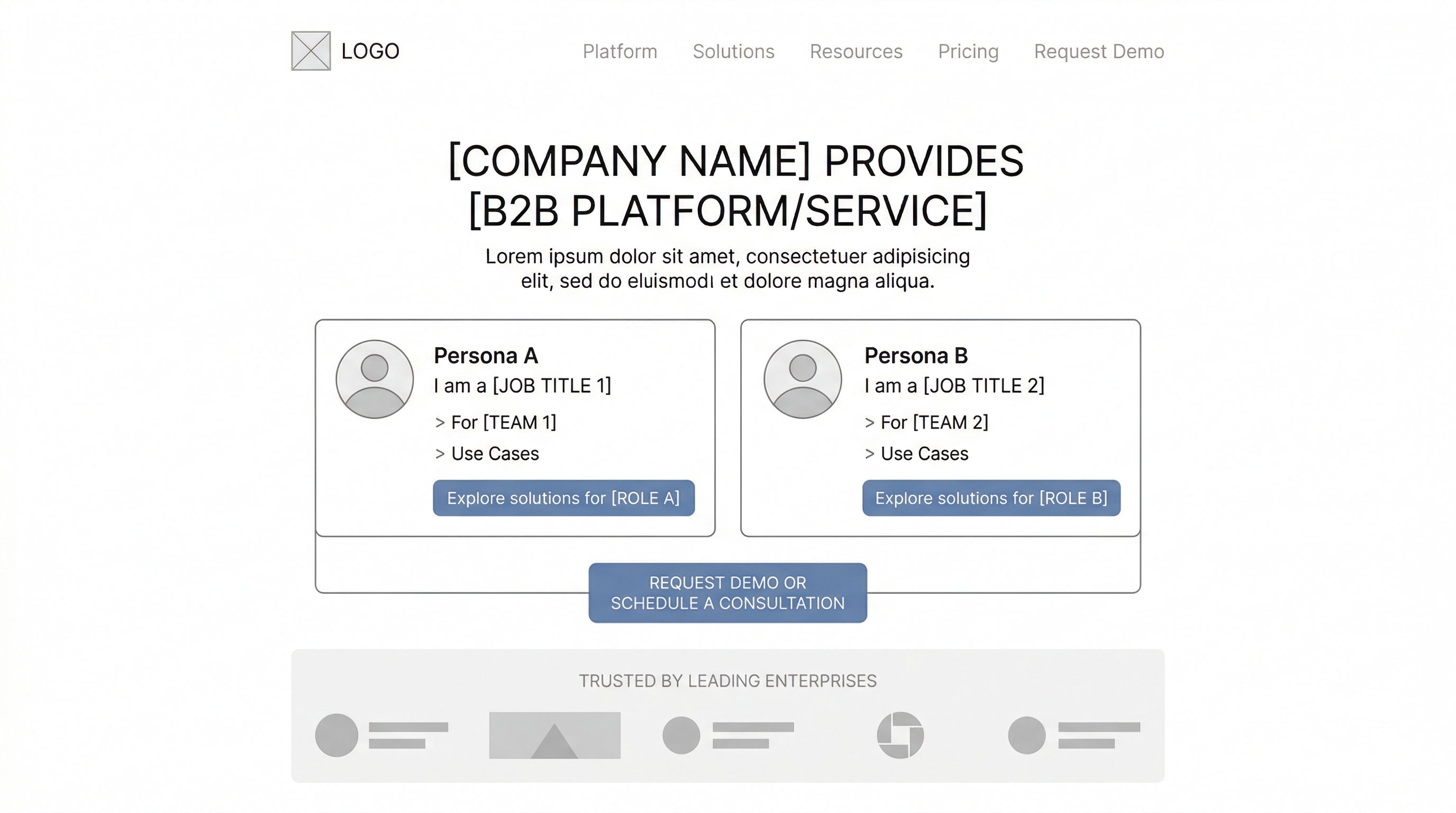
Purpose:
Help qualified visitors quickly decide if they are in the right place and where to go next.
Must-Have Sections:
Practical Example:
A RevOps SaaS homepage says, “Turn fragmented GTM data into a single source of truth for revenue teams.” It provides separate paths for CMOs and Sales Leaders and offers a short product overview video.
Purpose:
Move buyers from interest to active consideration.
Must-Have Sections:
Practical Example:
A managed IT provider explains common downtime risks, shows its three-step onboarding process, and highlights a real client outcome like reduced incidents within six months.
Purpose:
Convert high-intent visitors into booked meetings.
Must-Have Sections:
Practical Example:
A B2B website agency offers a “Website Blueprint Review” that promises five actionable fixes in 30 minutes, supported by a short form and direct calendar access.
Purpose:
Help the buying committee trust you.
Must-Have Sections:
Practical Example:
A consulting firm highlights its senior-only delivery model and links to its methodology, not generic company values.
Purpose:
Support SEO, sales enablement, and buyer education.
Must-Have Sections:
Practical Example:
A B2B software company groups resources by persona and links each guide back to a related solution page.
Purpose:
Practical Example:
An industrial supplier separates “Request a Quote” from general inquiries so sales leads are not delayed.
A strong b2b website designer knows when to add these pages based on data, not guesswork.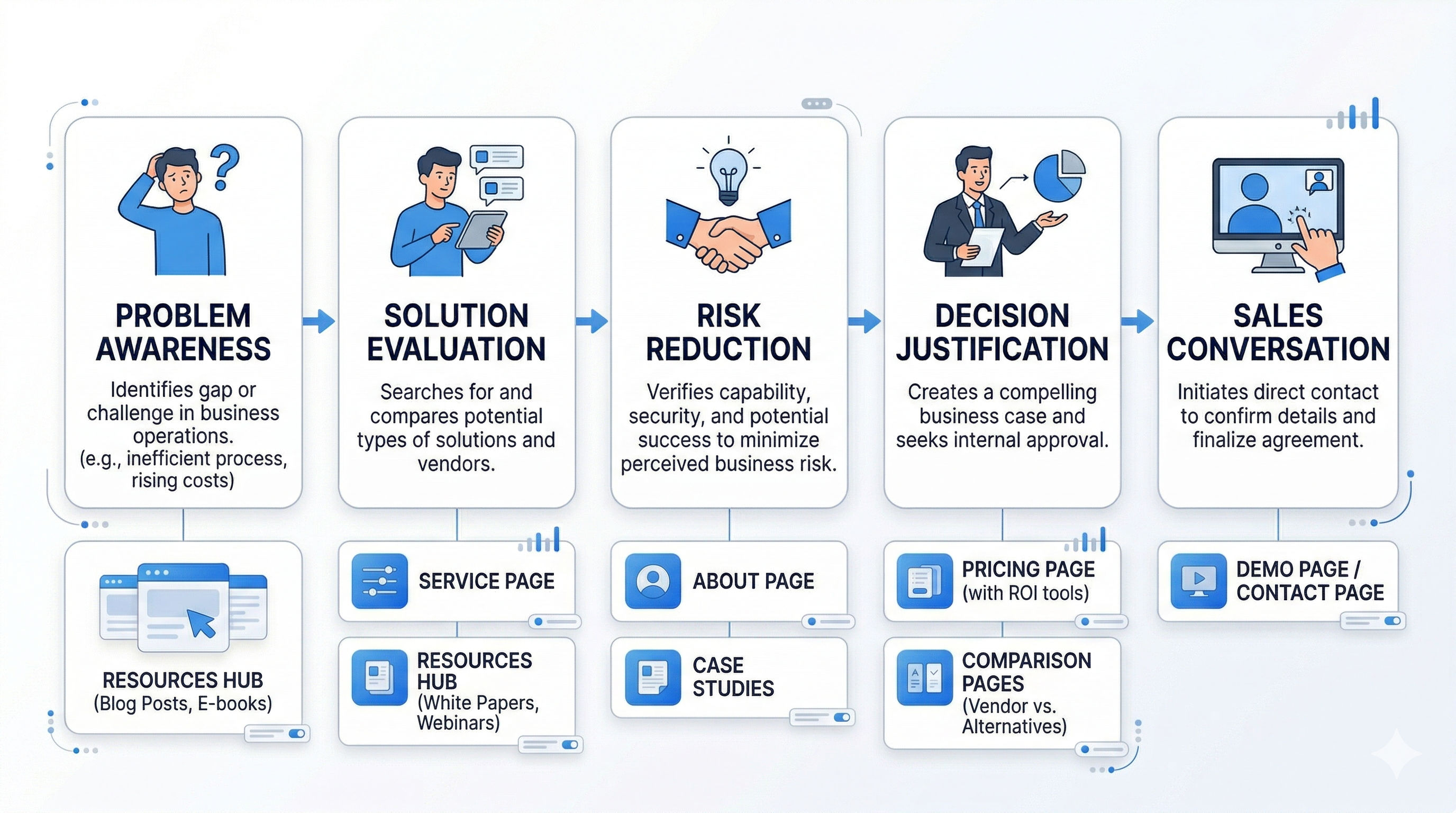
A B2B website blueprint only works if conversion paths are intentional.
Each page should have a primary CTA and a clear secondary option. Success is measured by improved conversion rates on core pages and better-qualified sales conversations, not raw traffic.
At Parkyd Digital, we help companies design and rebuild B2B websites as lead generation systems, not static brochures. As a specialized B2B website agency, we align structure, messaging, and conversion paths with how your buyers actually decide.
If your site feels like a collection of pages instead of a pipeline tool, a blueprint review is the right starting point.

Book a no-pressure discovery call and see how we can get your business rank, drive traffic, generate leads, and revenue. No sales pitch. No fluff. Just clarity.
Parkyd Digital is an award-winning B2B digital marketing agency in Kitchener-Waterloo region, Canada, helping businesses grow with SEO, Paid Media, HubSpot & high-performance website design & development. We partner with brands across GTA, Canada & entire North America to drive visibility, qualified leads & measurable revenue growth.
 Kitchener
 Toronto
 Vaughan
 Mississauga
 Brampton
 London
2026 - Parkyd Digital | All Right Reserved
Privacy Policy | Terms & Conditions

Hey, we hope you learned something new!
Let the Parkyd Digital team help you to grow your business, we are just a call away.
Click here to grow your business