 5.0
5.0
 4.9
4.9
 HubSpot
 4.9
4.9

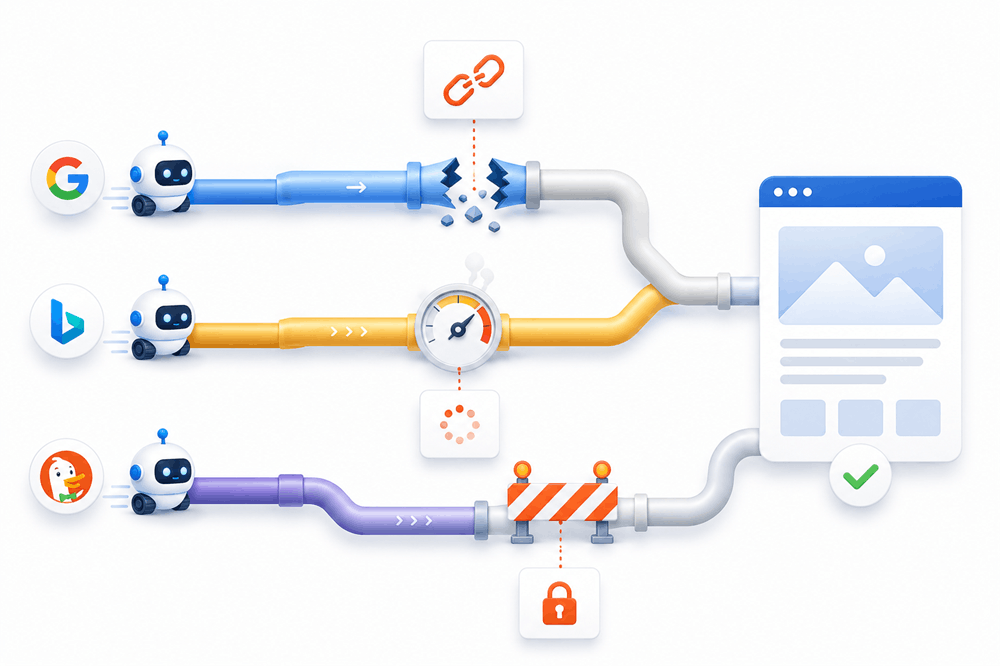
In B2B, your website isn’t just a brochure.It’s your pipeline engine.
But here’s the uncomfortable truth most companies miss:
You can have great content, strong case studies, even solid backlinks…
…and still lose leads — simply because search engines can’t properly access or understand your website.
That’s where technical SEO for websites comes in.
It’s not just backend hygiene.
It’s the difference between:
- being visible vs invisible
- getting traffic vs getting qualified leads
- ranking content vs actually driving pipeline
What Is Technical SEO (in Simple Terms)?
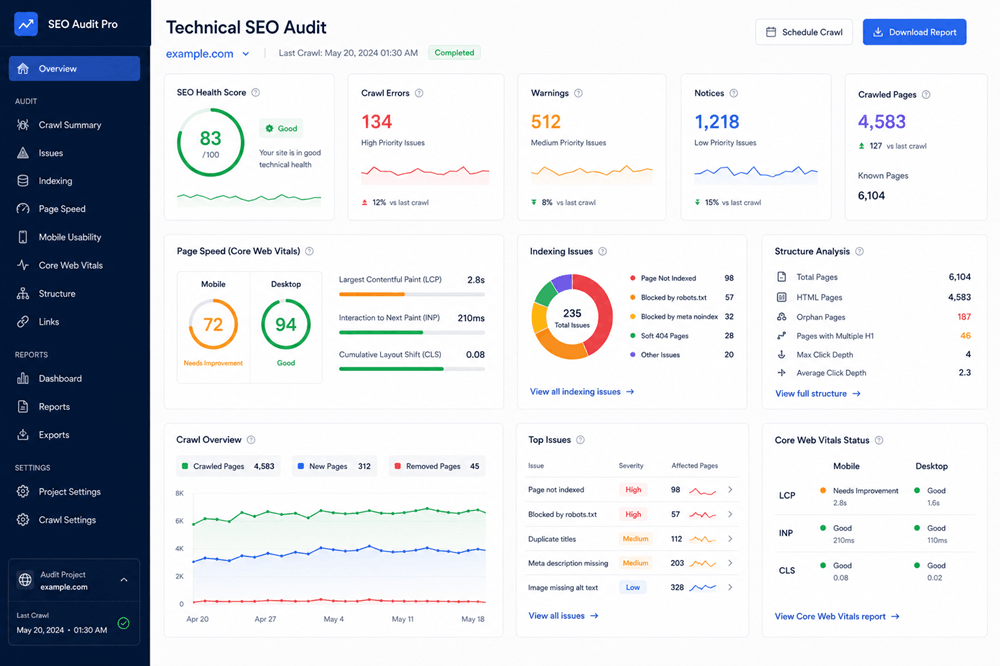
Technical SEO is the process of making your website easy for search engines to crawl, understand, and index.
Think of it like this:
- Content = what you say
- Backlinks = who trusts you
- Technical SEO = whether Google can even see and process you
If the technical foundation is broken, everything else underperforms.
Why Technical SEO Matters More in B2B
B2B is not impulse-driven.
Your buyer:
- visits multiple times
- compares vendors
- reads deeply
- comes back later
Now imagine this:
- A decision-maker clicks your page from Google
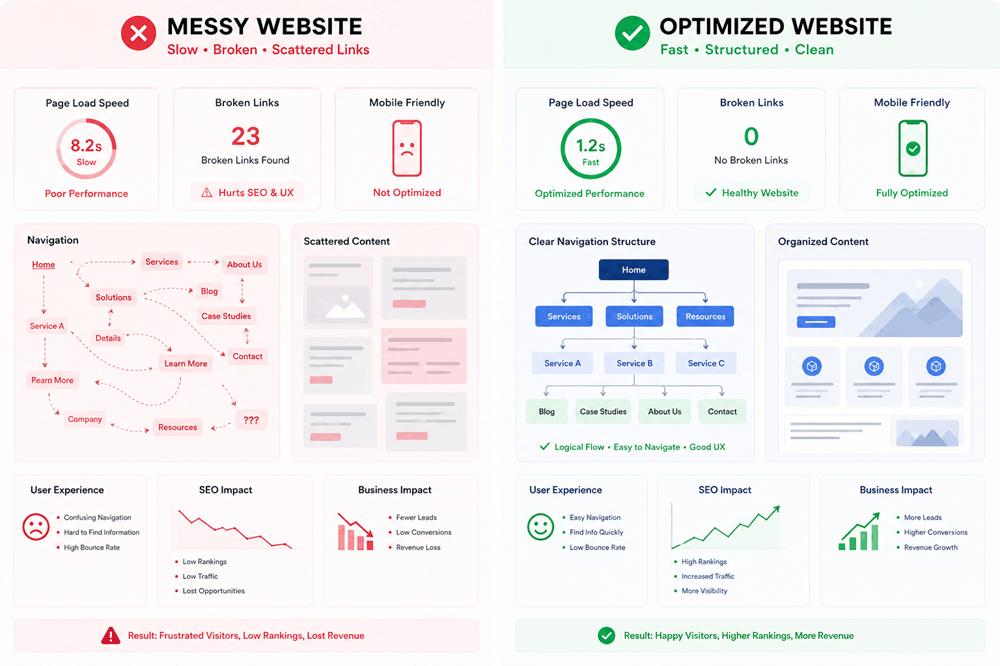
- It loads slowly
- Internal links are broken
- Case studies don’t open
- Mobile layout breaks
They don’t complain.
They leave.
And they don’t come back.
That’s how technical SEO silently kills revenue.
The Real Cost of Poor Technical SEO (B2B Reality)
Let’s make this real.
Scenario 1: Your best page isn’t indexed
You wrote a high-converting “Technical SEO Services” page.
But:
- it’s buried deep
- no internal links
- Google never prioritizes it
Result: Your best sales page doesn’t exist in search.
Scenario 2: You rank… but lose the lead
Your blog ranks.
But:
- page speed is slow
- layout shifts
- CTA loads late
Result: Traffic comes. Leads don’t.
Scenario 3: Duplicate pages confuse Google
You created:
- /seo-services
- /b2b-seo-services
- /technical-seo-services
All targeting similar intent.
Result: Google doesn’t know which one to rank → you lose all.
Core Pillars of Technical SEO for B2B Websites
1. Crawlability & Indexability
If Google can’t crawl your site, nothing matters.
If it crawls but doesn’t index → same result.
Key checks:
- Are important pages indexable?
- Any accidental noindex tags?
- Are pages too deep in structure?
Common B2B issue:
Case studies and solution pages are often hidden or poorly linked.
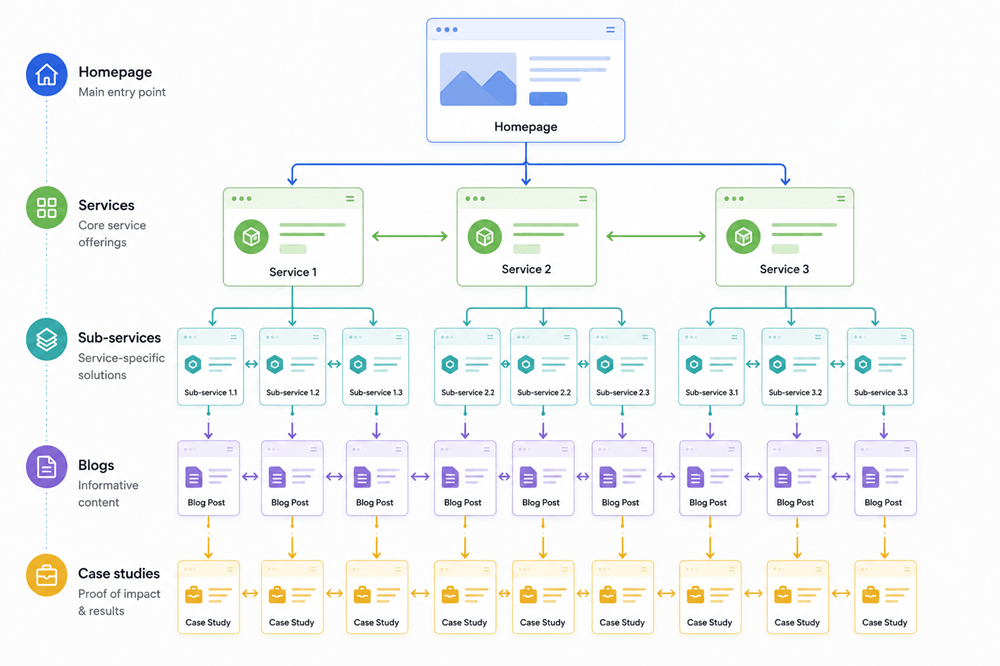
2. Site Architecture (Underrated Growth Lever)
Most B2B sites grow messy over time.
You add:
- blogs
- landing pages
- campaigns
- resources
But no structure.
Result:
- Google gets confused
- authority gets diluted
Fix:
Use a pillar + cluster model
Example:
- Pillar: Technical SEO Services
- Cluster: audits, page speed, site migration, etc.
3. Internal Linking (Huge Missed Opportunity)
Internal links tell Google:
“This page matters.”
But most B2B sites:
- link randomly
- or not at all
Result:
Important pages never gain authority.
Fix:
- link blogs → service pages
- link case studies → solutions
- keep contextual linking natural
4. Page Speed & Core Web Vitals
B2B buyers expect fast, smooth experiences.
Even in enterprise.
If your site:
- lags
- shifts
- freezes
trust drops instantly
And yes — Google uses Core Web Vitals as part of ranking systems.
JavaScript & Rendering Issues
Modern B2B sites use:
- React
- Vue
- heavy animations
But here’s the problem:
Google may not fully render your content
Meaning:
Your page looks great to users…
…but empty to search engines.
Fix:
- server-side rendering (SSR)
- dynamic rendering where needed
5. Canonicalization & Duplicate Control
Google hates confusion.
If multiple pages say the same thing:
It chooses one (not always yours)
Fix:
- proper canonical tags
- clear page purpose
- avoid overlapping content
7. XML Sitemap & Robots Control
Think of this as your navigation system for Google
- Sitemap = what to crawl
- Robots = what to avoid
B2B tip:
Exclude:
- thank-you pages
- admin pages
- filters
Focus crawl on:
- services
- case studies
- high-intent blogs
What a Good Technical SEO Audit Actually Includes
A real technical SEO audit is not a checklist.
It’s a diagnosis.
It should answer:
- Why is traffic not converting?
- Which pages are not indexed?
- Where is crawl wasted?
- What is slowing users down?
- Which pages are competing internally?
You should run an audit when:
- traffic plateaus
- redesign just happened
- rankings dropped
- scaling content isn’t working
Reality:
Most B2B companies invest in content first…
and audit later (when things break)
When You Need Technical SEO Services (Not Just Advice)
You likely need a technical SEO agency if:
- your site has grown beyond 50–100 pages
- you’ve done redesigns/migrations
- you rely on organic leads
- your pipeline depends on SEO
Because at that stage:
- SEO is no longer content
- It’s infrastructure
Why a B2B SEO Agency Is Different
A general SEO agency chases traffic.
A B2B SEO agency focuses on:
- pipeline
- qualified leads
- decision-stage content
- long sales cycles
And most importantly, aligning technical SEO with revenue
Final Thought: Technical SEO Is Not Optional
If your website has technical friction: You’re not just losing rankings. You’re losing deals you never even knew existed.
Stop Leaving Organic Leads on the Table
If your traffic isn’t converting, the issue is often not your messaging. It’s your foundation.
Parkyd Digital helps B2B companies uncover:
- crawl issues
- indexation gaps
- site architecture flaws
- performance bottlenecks
The things that silently limit growth.
Get a Technical SEO Audit now → Identify what’s holding your pipeline back