


Hey, we hope you learned something new!
Let the Parkyd Digital team help you to grow your business, we are just a call away.

Parkyd's free website grader makes understanding website performance easy. Learn about your page performance, security, search engine optimization (SEO), and mobile experience. Discover what makes your site strong and uncover new opportunities for the future.
Check My WebsiteCase Study

Search in 2026 is no longer just about “being on page one.”
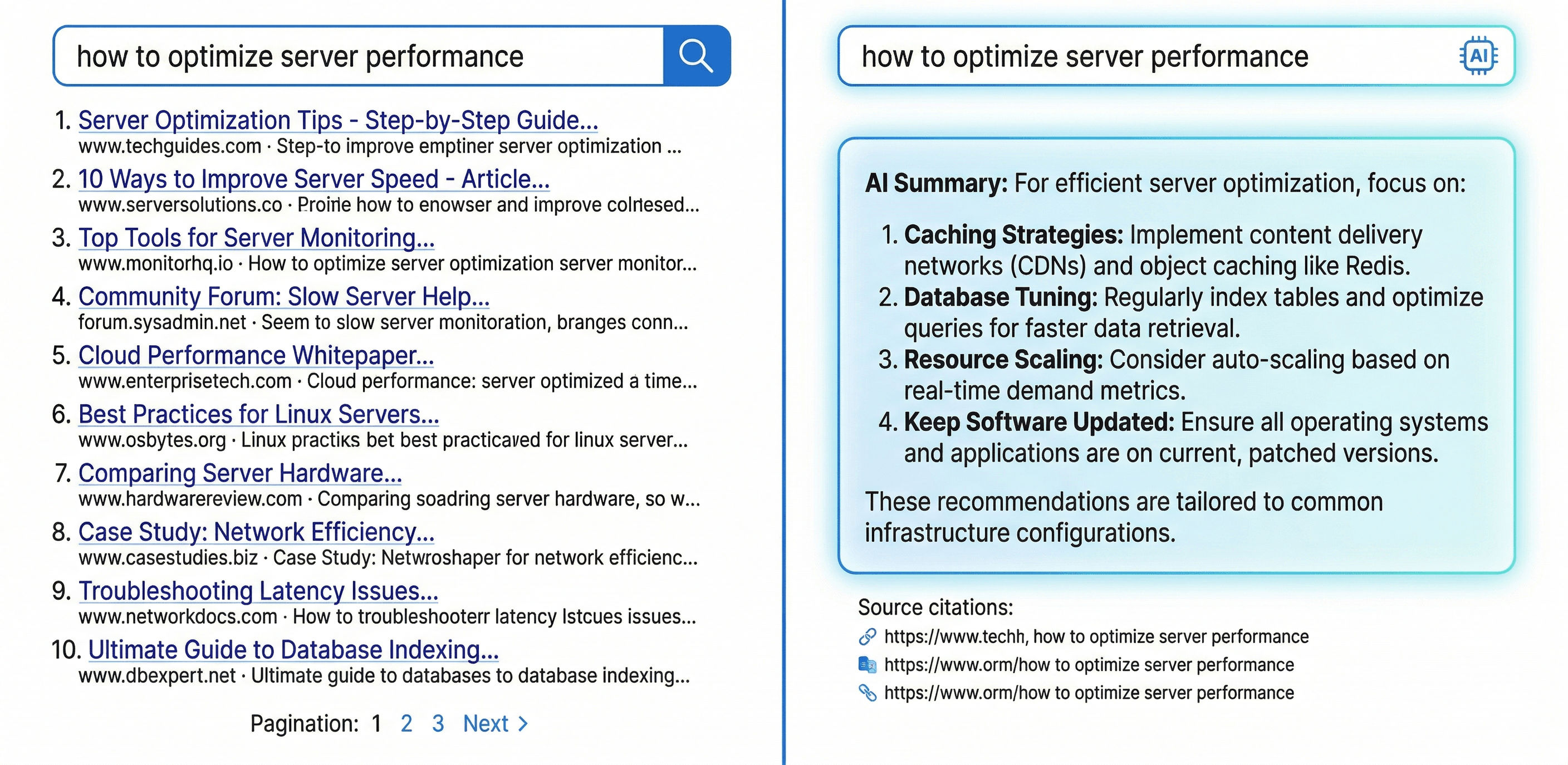
B2B buyers are increasingly using ChatGPT, Gemini, Perplexity, and Google AI Overviews to understand categories, shortlist vendors, and compare solutions—often before they ever click through to a website.
If your SEO strategy only targets classic rankings, you can still earn traffic. But you may miss where many early- and mid-funnel decisions now begin: AI-generated answers.
That’s exactly what LLM SEO is designed to address.
This guide explains LLM SEO in plain English, how it differs from traditional SEO, what matters most in 2026, and how B2B teams can use it to earn both rankings and recommendations.
An LLM (Large Language Model) is an AI system trained on huge amounts of text to understand language and generate answers. Tools like ChatGPT, Gemini, and Perplexity are powered by these models.
In B2B, buyers use LLMs to:
Get a landscape view: “What are the main types of ABM platforms?”
Shortlist vendors: “Best B2B SEO agencies for SaaS in North America?”
Translate complexity: “How do HubSpot, Salesforce, and a data warehouse connect?”
If your brand doesn’t show up (or is misrepresented) at this “research layer,” you can lose the deal before evaluation even starts—even if your Google rankings look fine.
Simple example:
Two vendors rank for a query, but the buyer asks an AI tool for “top recommendations.” Only the vendor with clearer positioning and more structured, reference-worthy content gets mentioned.
LLM SEO is the practice of optimizing your digital footprint so AI systems can:
A helpful way to think about it:
LLM SEO is less about exact-match keywords and more about clarity, structure, and entity-level signals that reduce ambiguity.
Traditional SEO isn’t dead. It’s just incomplete on its own.
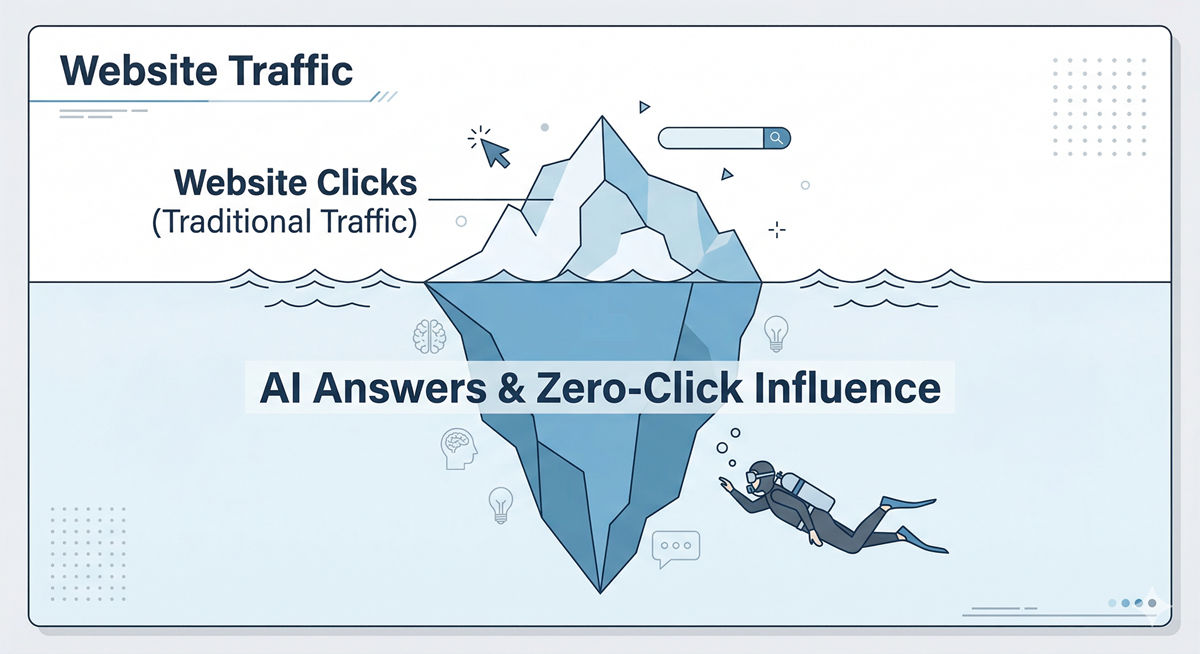
In modern search, discovery happens in two layers:
Example:
Two agencies rank for “B2B SEO services.” Only one is consistently recommended by AI tools because its site clearly states who it serves, what it specializes in, and how it works. That clarity makes it easier for AI to recommend confidently.
LLMs interpret the world through entities—companies, concepts, industries, tools, and the relationships between them.
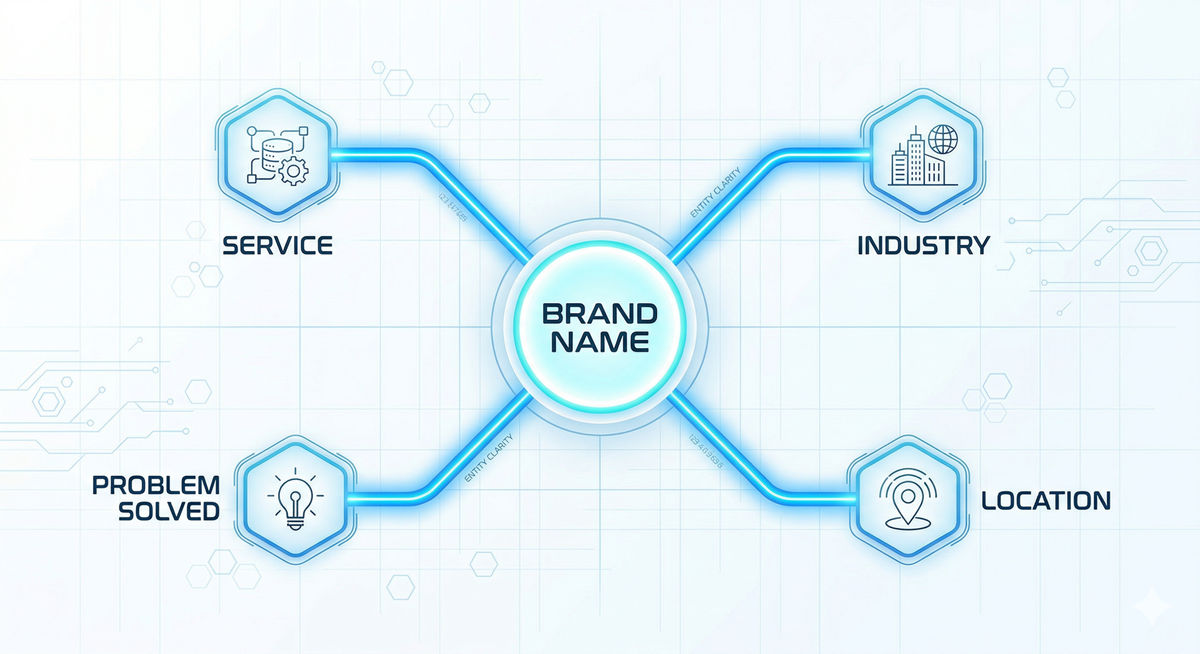
For B2B brands, strong entity signals typically include:
Example (Before vs After):
Before: “We offer marketing services for all businesses.” (vague)
After: “We’re a B2B digital marketing agency helping SaaS and service businesses grow pipeline through SEO, HubSpot, and paid media.” (clear)
When this clarity is missing, AI tools may place you in the wrong category—or skip you entirely.
LLMs can read long text, but structure helps them extract the right parts fast.
High-performing formats include:
This structure helps humans skim, helps Google index, and helps AI tools summarize accurately.
In 2026, “more posts” is rarely the answer.
Winning content tends to:
Practical takeaway:
Instead of publishing five thin posts, publish one strong guide that becomes the “reference” page—and then build supporting pieces around it later.
AI systems favor sources that look credible and consistent.
In B2B, trust is reinforced by:
You don’t need hype. You need clarity and signals that can be cross-checked.
AI SEO tools can help with:
But tools don’t replace:
AI works best as a co-pilot: it accelerates output, but humans decide what matters.
Many B2B teams should keep in-house:
Expert support tends to pay off when you need:
A hybrid approach is common: internal teams own the narrative, external partners strengthen structure and execution.
Parkyd Digital focuses on B2B teams where search and content influence pipeline, not just traffic.
Our work typically follows four pillars:
If your team wants to understand how your brand currently appears in AI tools—and where your entity and content gaps are—a focused LLM SEO audit is often the most practical first step.
Why start here?
The future of search is not just about ranking higher. It’s about being credible enough to be recommended.
LLM SEO helps you earn visibility in both places that matter in 2026:
Book a no-pressure discovery call and see how we can get your business rank, drive traffic, generate leads, and revenue. No sales pitch. No fluff. Just clarity.
Parkyd Digital is an award-winning B2B digital marketing agency in Kitchener-Waterloo region, Canada, helping businesses grow with SEO, Paid Media, HubSpot & high-performance website design & development. We partner with brands across GTA, Canada & entire North America to drive visibility, qualified leads & measurable revenue growth.
 Kitchener
 Toronto
 Vaughan
 Mississauga
 Brampton
 London
2026 - Parkyd Digital | All Right Reserved
Privacy Policy | Terms & Conditions

Hey, we hope you learned something new!
Let the Parkyd Digital team help you to grow your business, we are just a call away.
Click here to grow your business